
Staying with the trouble
And holding fast to values of justice, peace, and inclusion in confusing times

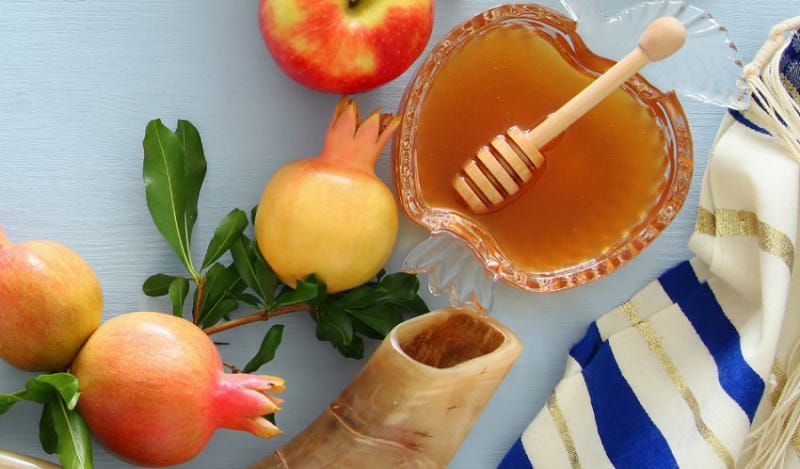
As we approach the anniversary of October 7, as well as the holiest days of the Jewish calendar, I find myself feeling solemn and filled with grief. I am struggling with finding what to say in this space, to be of service. My focus here is on the antisemitism that Jewish people are facing, in particular its explosion since October of last year. I am no expert on geopolitics. But I do know social justice, especially in the American context. I do know the history of the Jewish people in my nation. I do understand how antisemitism works and the harm it does. To be in solidarity with Jewish Americans, and with Jewish people wherever they live, is the assignment I have given myself. I ask myself every day, how can I best fulfill that assignment?
Recently I had the pleasure to spend several days in the company of a friend who lives far from me and whom I hadn’t met in person since before Covid times. She immigrated to the US from South America when she was a child. Her concern and sympathy lie with the people of Gaza. (She has never said anything against Israelis or Jewish people; I have never heard her express antisemitic ideas.) We have agreed not to talk about Israel and Gaza, because our ideas often conflict and our feelings are strong. But as we came close to the topic in our time together, she said to me: “Just tell me this. If the Nazis came for me, would you hide me?” At first I was stunned. (I realize that it’s not literal Nazis who would come for her, but white supremacist, anti-immigrant fascists, even though she is an American citizen.) For a moment, I was quiet. And then I said, Of course I would. Of course I would.
What strikes me about our exchange is that it revealed what worries her the most (which is not to minimize her real concern for Gazans): Is she, and are people like her—brown, immigrant, less socially advantaged—safe with people like me: white, socially privileged, well intentioned, trying-to-be-antiracist. Is my support for Jewish people just support for other well-off, light-skinned people like me? (I understand that Jewish people are not necessarily light-skinned, affluent, or socially powerful, and that the Jewish relationship to white privilege is complicated and conditional; but the stereotype of Jewish people as “rich powerful white people” is part of what’s at play in the current antisemitism.)
Am I, a white gentile who supports the Jewish right to a homeland, siding with “other white people” at the expense of Black, Indigenous, and other people of color? Because this is how the “progressive left” in America ignorantly and inaccurately casts the situation in the Levant: as white against brown, oppressor vs. oppressed, settlers stealing from Indigenous people.
I confess that I worry whether other progressives think that because I support Jewish and Israeli people, my white supremacy is showing. That doesn’t make sense really, because Jewish people have always been targets of white supremacists in America. But, again, a simplistic view of the conflict is that it is brown vs. white and revolutionary vs. apologist for empire, where brown people are always oppressed revolutionaries, and white people—including Jewish people—plus a few tokens (like, apparently, Kamala Harris because she dares to seek the highest office in the land) are always oppressors shoring up empire.
Perhaps you think the simplistic view sounds ridiculous, a strawman. Surely no one really believes that. Yet I notice the simplistic view underlying much of the discourse around the ongoing conflict, violence, and war in the Levant.
Here is something I spend a lot of time thinking about. Those who support Israel’s existence and flourishing (which is not the same thing as uncritically approving of Israel’s right wing, leadership, or war) are working from very different narrative assumptions than those who don’t oppose the war so much as they support the “resistance movements” of Hamas, the Houthis, and Hezbollah. Because unfortunately what I see from “pro-Palestine” protestors is not an opposition to war so much as support for terrorism. What I see is not a desire for peace but an exclusion of Zionists (by which they mean Jews, make no mistake) from public spaces. How are exclusion and hate in our own country supposed to lead to peace and justice, either here or abroad? How do violence, exclusion, and threats against an oppressed minority, the Jewish people, support the safety and self-determination of people in Gaza?
How powerful an anti-war, anti-terrorism movement in the U.S. and European countries would be! Imagine if we were taking to the streets and organizing on our university campuses in support of the Israelis marching in their own streets against Netanyahu; in support of Jewish people and Israelis who deeply yearn for peace and work for peace (and that includes everyone taken hostage, if you read their stories); and in solidarity with Palestinians who want to be free from Hamas, and the citizens of Lebanon, Afghanistan, Syria, and Iran who want to live their lives without terrorism, war, and draconian governments?
Remember what we care about, American progressives and others! Women’s rights, rights for LBGTQ+ people, religious freedom, free elections, protections for minorities, safety from violence, legal recourse against harm, and access to health care and good jobs and safe food and medicine. We care about democracy. So, by the way, does Israel, as a nation (Netanyahu not so much, but we Americans know all about electing an autocratic leader).
What if we stood against not only the imperialism of whiteness and the global north but also against the imperialism of those who desire the destruction of Israel and the Jews, first, and the establishment of an Islamist caliphate over many nations? Let us support freedom-loving Muslims, Jews, Christians, Hindus, and others, regardless of ethnicity or religion. Let us work for democracy and peace, no matter how far away we seem to be from realizing those ideals.
As we move through this season, posting will slow, as it already has. I need time for grief and remembrance, and also time for ideas to take shape. I wish for you solace, a place for your grief, and the joy of family, community, and togetherness during the High Holy Days and beyond. I send you prayers for safety, peace, healing, and belonging.
it is very interesting how the issue of the support of jewish people become racialized despite the fact that a large number of Jews never were considered White. So the issue is turned to make a political argument by sacrificing the truth
I attended an Oct 7th Remembrance Day event - it was very sad. Such grief, such heartache: for everyone. I often think that is what is missing from the pro-Palestinian anti-Israel progressive left outrage.